


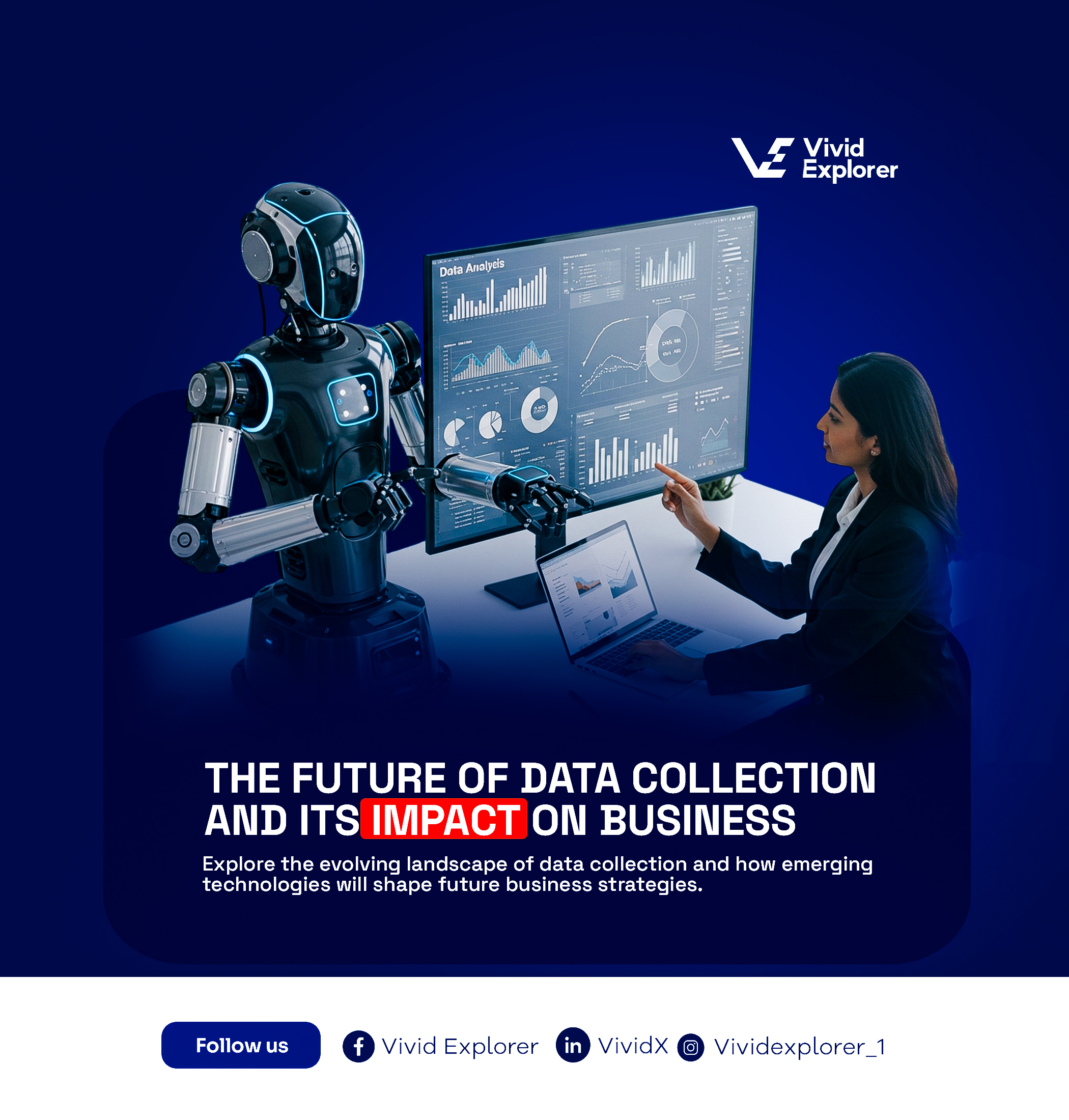
The Future of Data Collection and Its Impact on Business
Data collection is evolving from passive accumulation to intentional design. As real-time systems, distributed architectures, and privacy-first frameworks reshape how data is gathered, businesses must shift from collecting more to collecting smarter. The future belongs to organizations that can turn continuous, high-quality data into immediate, trusted decisions.For a long time, data collection was treated as a supporting function.
Something that happened in the background.
Something technical.
Something operational.
That era is ending.
Data collection is becoming a strategic layer of the business itself, shaping not just how organizations understand performance, but how they anticipate, respond, and compete.
The shift is subtle, but profound:
We are moving from collecting data about the business
to designing the business around data.
The Evolution: From Exhaust Data to Intentional Signals
Historically, most data was what you could call exhaust.
Transaction logs.
Clickstreams.
System records.
Data generated as a byproduct of activity.
But the future is different.
Data is becoming intentional.
Organizations are no longer asking, “What data do we have?”
They are asking, “What signals do we need to make better decisions?”
This reframing changes everything.
It shifts data collection from passive accumulation to purposeful design.
The Collapse of the Time Gap
One of the most important shifts happening is the disappearance of the time gap between:
Event → Data → Insight → Action
Traditionally, this process could take days or weeks.
Now, it is compressing into seconds.
This is being driven by:
- Real-time data pipelines
- Stream processing architectures
- Edge computing capabilities
- Event-driven systems
As this gap collapses, businesses no longer operate in hindsight.
They operate in continuous awareness.
And that changes the nature of decision-making itself.
From Centralized Control to Distributed Intelligence
Another critical transformation is architectural.
Data collection used to be centralized.
Everything flowed into a warehouse.
Everything was processed in one place.
But modern systems are becoming distributed.
Data is collected, processed, and sometimes acted upon at the edge, closer to where it is generated.
This creates:
- Faster response times
- Reduced dependency on central systems
- Greater resilience and scalability
But it also introduces a new challenge:
How do you maintain consistency and trust across a distributed data environment?
This is where governance, architecture, and strategy become inseparable.
The Rise of Selective Data
One of the least discussed, but most important, shifts is this:
In the future, not all data will be worth collecting.
As data volumes grow, the cost of noise increases.
Storage is no longer the constraint.
Attention is.
Organizations that succeed will not be those that collect everything.
They will be those that:
- Define what truly matters
- Filter aggressively
- Prioritize signal over volume
This is the transition from big data to right data.
Privacy, Ownership, and Trust as Strategic Factors
Data collection is no longer just a technical issue.
It is a trust issue.
Customers are more aware.
Regulations are more demanding.
Expectations are higher.
Future-ready organizations are shifting from:
“How much can we collect?”
to
“What should we collect, and how responsibly?”
This introduces new priorities:
- Transparent data practices
- Consent-driven collection models
- Secure data architecture
- Ethical use of information
Trust is becoming a competitive advantage.
And data strategy is now directly tied to it.
The Changing Role of Analytics Teams
As data collection evolves, so does the role of the people managing it.
Analytics teams are no longer just interpreters of data.
They are becoming:
- Designers of data flows
- Architects of decision systems
- Translators between technology and business
Their role shifts from answering questions to shaping how questions are asked in the first place.
What This Means for Business Strategy
The impact of all these shifts is not incremental.
It is structural.
Businesses that adapt will operate differently:
1. Decision-Making Becomes Continuous
Not periodic. Not meeting-based.
But embedded into operations.
2. Strategy Becomes Dynamic
Instead of fixed annual plans, strategy evolves in response to real-time signals.
3. Operations Become Self-Optimizing
Systems begin to adjust automatically based on incoming data.
4. Customer Experience Becomes Predictive
Businesses move from reacting to customer needs to anticipating them.
Where Most Organizations Will Struggle
Despite the opportunity, many organizations will face friction in adapting.
Common barriers will include:
- Legacy systems that cannot support real-time data
- Fragmented data environments across tools
- Lack of clarity on what data actually matters
- Over-reliance on manual processes
- Cultural resistance to data-driven decision-making
Without addressing these, advanced data collection capabilities can create complexity without clarity.
How Vivid Explorer Approaches the Future
At Vivid Explorer, the focus is not on collecting more data.
It is on making data usable, timely, and decision-focused.
This means:
- Designing data systems around business decisions, not just storage
- Integrating fragmented data into cohesive, real-time structures
- Reducing noise while increasing relevance
- Enabling organizations to act on data as it is generated
Because the real advantage is not access to data.
It is the ability to move with it.
The future of data collection will not be defined by scale.
It will be defined by intent, speed, and trust.
Organizations that understand this will not just be more informed.
They will be more responsive, more adaptive, and more competitive.
Because in the end, the question is no longer:
How much data do you have?
It is:
How well does your data keep up with the decisions you need to make?
Similar publication
 The Future of Data Collection and Its Impact on Business
Data collection is evolving from passive accumulation to intentional design. As real-time systems, distributed architectures, and privacy-first frameworks reshape how…
Read More Why Data Doesn’t Change Behavior, People Do
Organizations today are rich in data but often unchanged by it. The gap is not in insight, but in behavior.…
Read More 5 Signs Your Business Needs a Data Overhaul
Many businesses rely on data daily, yet struggle with delays, inconsistencies, and unclear insights. From slow reporting to disconnected systems,…
Read More The Journey to Data Maturity: 5 Key Stages and How to Navigate Them
The journey to becoming a data-driven organization happens in stages. From reactive reporting to predictive intelligence, each level of data…
Read More